Summary
Neck injuries after motorcycle crash incidents can affect muscles, ligaments, joints, and nerves, even when symptoms seem minor at first. Learn the common warning signs, available treatment options, and when to seek medical or chiropractic care to support a safe recovery and reduce the risk of long-term complications.
Table of Contents
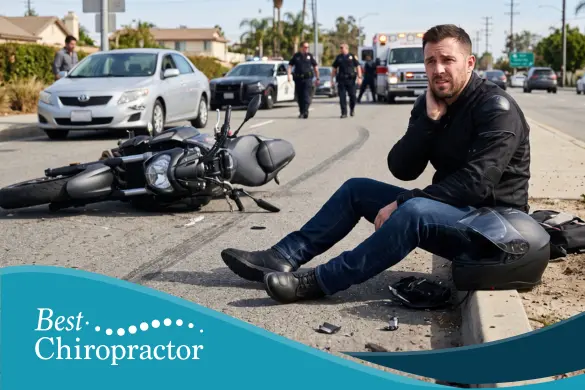
Neck injuries after motorcycle crash incidents are more common than many riders realize. Even when a collision happens at moderate speed, the sudden force can stretch, compress, or twist the structures in your neck within seconds.
Some injuries cause immediate pain, while others develop gradually over the next several hours or days. Ignoring these symptoms may lead to longer recovery times and ongoing discomfort. Learning what happens to the neck during a motorcycle accident, the warning signs to watch for, and when to seek professional care can help you make informed decisions after a crash.
Why the Neck Is Vulnerable in a Motorcycle Crash
Unlike occupants inside passenger vehicles, motorcycle riders have little protection during a collision. Without airbags or a protective cabin, the body absorbs much of the impact.
During a crash, the head often moves forward, backward, or sideways with tremendous force. Even a properly fitted helmet cannot prevent every neck injury because helmets primarily protect against traumatic brain injuries and skull fractures.
Common crash forces that affect the neck include:
- Rapid acceleration and deceleration
- Sudden twisting during impact
- Direct contact with the ground or another vehicle
- Landing awkwardly after being thrown from the motorcycle
These movements place stress on:
- Neck muscles
- Ligaments
- Tendons
- Cervical vertebrae
- Intervertebral discs
- Facet joints
A study published in the National Library of Medicine involving 1,413 motorcycle trauma patients found that approximately 20% sustained head and neck injuries. This highlights how frequently these areas are affected in motorcycle crashes.
How a Motorcycle Neck Injury Affects Muscles, Ligaments, and Joints
The cervical spine consists of seven vertebrae supported by muscles, ligaments, discs, and nerves. When excessive force is applied during a motorcycle collision, several structures may be injured simultaneously.
Neck Structure | Possible Injury | Common Effects |
Muscles | Strains | Pain, stiffness, muscle spasms |
Ligaments | Sprains | Reduced stability and limited movement |
Cervical Discs | Bulging or herniation | Radiating pain or numbness |
Facet Joints | Joint irritation | Pain when turning the head |
Nerves | Compression | Tingling or weakness in the arms |
One of the most common conditions is whiplash, which occurs when the neck rapidly snaps back and forth. Although often associated with car accidents, whiplash frequently affects motorcycle riders as well.
More severe crashes may also result in:
- Cervical fractures
- Spinal cord injuries
- Nerve damage
- Soft tissue inflammation
Some injuries are immediately obvious, while others become noticeable only as adrenaline begins to wear off.
Common Symptoms to Watch for After a Motorcycle Crash
Not every injury appears right away. Some symptoms may develop several hours after the collision or even the following day.
Watch for the following warning signs:
- Neck pain or tenderness
- Stiffness when turning your head
- Muscle spasms
- Headaches beginning at the base of the skull
- Shoulder pain
- Pain radiating into the arms
- Tingling or numbness in the hands or fingers
- Dizziness
- Reduced range of motion
These symptoms should never be ignored, even if they seem mild initially.
Neck injuries after motorcycle crash events may worsen without prompt evaluation because inflammation can increase over time.
How Motorcycle Neck Injuries Are Diagnosed and Treated
Healthcare providers typically begin with a physical examination and review the circumstances of the accident.
Depending on your symptoms, they may recommend imaging tests such as:
- X-rays
- CT scans
- MRI scans
These studies help identify fractures, disc injuries, ligament damage, or nerve compression.
Treatment varies based on the severity of the injury, but often includes:
Conservative Care
Many patients benefit from non-surgical treatment, including:
- Rest during the early recovery period
- Ice and heat therapy
- Anti-inflammatory medications
- Physical therapy
- Gentle stretching exercises
Chiropractic Care
For certain soft tissue and joint injuries, chiropractic care may help improve mobility, reduce stiffness, and support recovery after medical clearance.
The best chiropractor in Los Angeles can evaluate spinal movement, identify areas of restricted motion, and develop a personalized treatment plan based on your condition.
Every injury is unique, so treatment should always be tailored to the individual patient.
When to Seek Medical Care and Chiropractic Evaluation
After any motorcycle accident, it’s safest to seek medical evaluation even if you feel relatively well.
Seek immediate emergency care if you experience:
- Severe neck pain
- Loss of consciousness
- Difficulty moving your arms or legs
- Loss of balance
- Difficulty breathing
- Numbness or weakness
- Severe headache following the collision
Once serious injuries have been ruled out, chiropractic care may be part of your recovery plan for soft-tissue injuries and mobility concerns.
Consider scheduling an evaluation if you experience:
- Persistent stiffness
- Limited neck movement
- Ongoing headaches
- Muscle tightness
- Lingering discomfort for several days after the accident
Working with the best chiropractor in Los Angeles may help restore function while supporting your overall rehabilitation plan alongside other healthcare providers.
Tips for Supporting Recovery
Recovery often involves more than simply waiting for pain to disappear.
Consider these practical steps:
- Follow your healthcare provider’s recommendations.
- Attend every follow-up appointment.
- Avoid returning to strenuous activity too soon.
- Practice prescribed stretching exercises.
- Maintain good posture during daily activities.
- Monitor symptoms and report any changes promptly.
Early attention often leads to better outcomes and may help reduce the risk of chronic pain.
Helping You Recover After a Motorcycle Crash
Motorcycle accidents place tremendous stress on the cervical spine, making neck injuries after motorcycle crash incidents a significant concern for riders throughout California. Even seemingly minor symptoms can signal damage to muscles, ligaments, joints, or nerves that deserve professional evaluation.
If you’ve recently been involved in a motorcycle accident and are experiencing neck pain or stiffness, don’t wait for symptoms to worsen. Book an appointment with us today for a comprehensive chiropractic evaluation and personalized treatment plan designed to support your recovery and help you return to your daily activities safely.
Frequently Asked Questions
Can neck pain appear days after a motorcycle accident?
Yes. Inflammation and muscle strain may develop gradually, leading to symptoms that appear several hours or even days after the crash.
How do you know if your neck injury is serious after a motorcycle crash?
Serious neck injuries after a motorcycle crash may present as severe pain, limb numbness or weakness, limited mobility, balance issues, or chronic headaches. Seek immediate medical attention if symptoms are severe or worsen over time.
When should I see a chiropractor after a motorcycle crash?
After a medical evaluation and ruling out serious injuries such as fractures or spinal cord damage, a chiropractor may help manage soft-tissue injuries, stiffness, and reduced mobility.
Can untreated neck injuries become long-term problems?
Yes. Without proper evaluation and treatment, some neck injuries may contribute to chronic pain, decreased range of motion, recurring headaches, or ongoing muscle stiffness.